Museum panel | Galion, Ohio industrial history

Edward Flickinger and the rise of Galion's wheel industry

In the late nineteenth century, Galion became known for wheel and wagon-related manufacturing. Edward Flickinger stood near the center of that story as an entrepreneur, investor, promoter, and public figure whose career helps explain how a small Ohio city linked local industry to wider networks of capital, production, and conflict.

The story at a glance

1892
Flickinger established the Flickinger Wheel Works in Galion.
1898
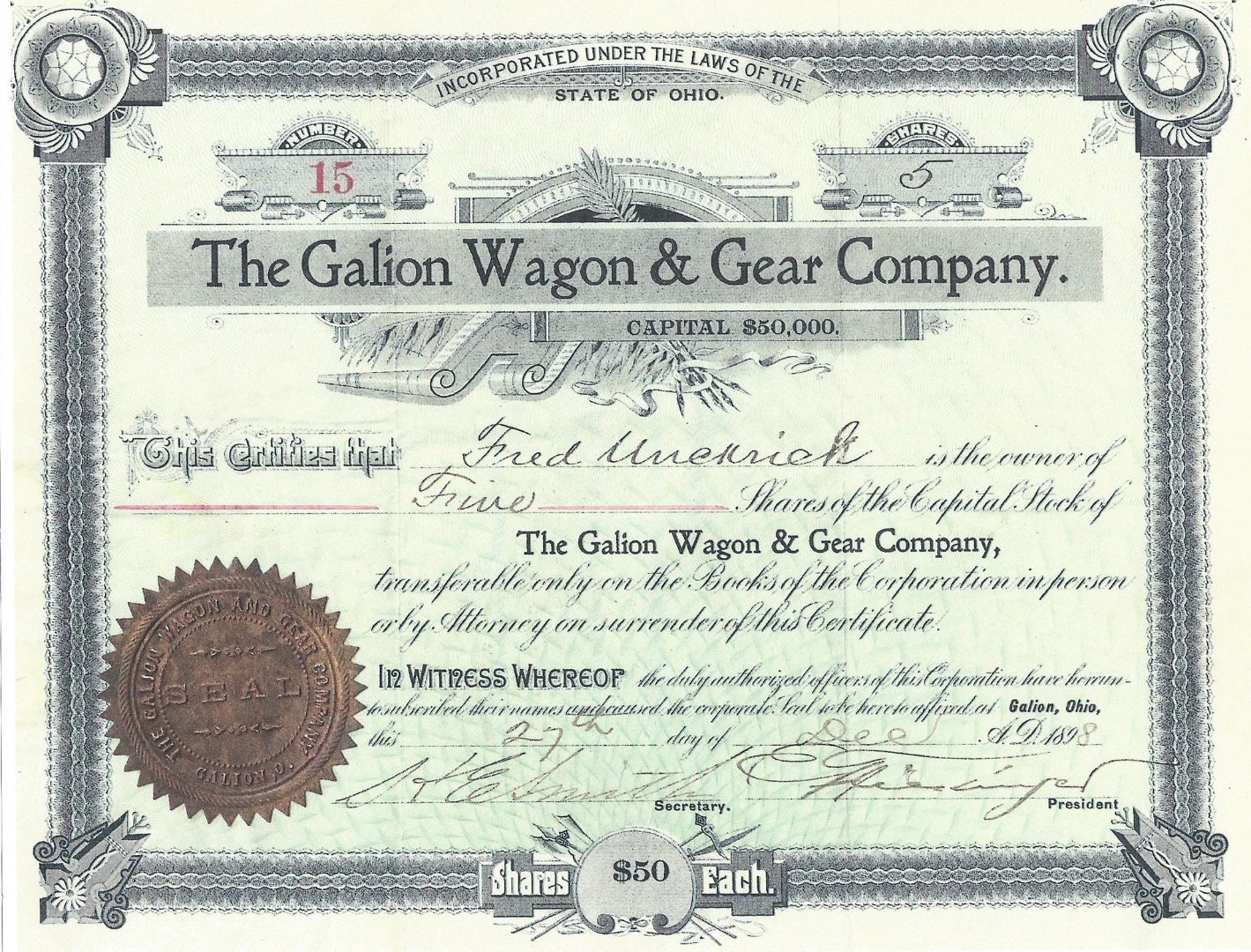
Date shown on the attached Galion Wagon & Gear stock certificate image.
1904
The wheel trust crisis drew public and legal attention.
$50
Par value printed on each share of the 1898 stock certificate.

Why Galion mattered

The 1912 History of Crawford County gave Galion a full city chapter and a separate manufacturing chapter, a sign that contemporaries saw the town as an important industrial center within Crawford County.

Why Flickinger mattered

Edward Flickinger was not just a factory operator. Family history published at his request identifies him as a Galion resident and publisher-patron in 1902, showing both money and local standing.

Chronology

Before 1892
Flickinger had already built a reputation in wheel manufacturing before making Galion the center of a new industrial phase.
1892
According to family and local historical references, Flickinger established the Flickinger Wheel Works in Galion, tying his name directly to the city’s industrial growth.
1898
The attached stock certificate from the Galion Wagon & Gear Company shows 15 shares at $50 each, for a face value of $750, and demonstrates the formal capitalization behind local enterprise.
Early 1900s
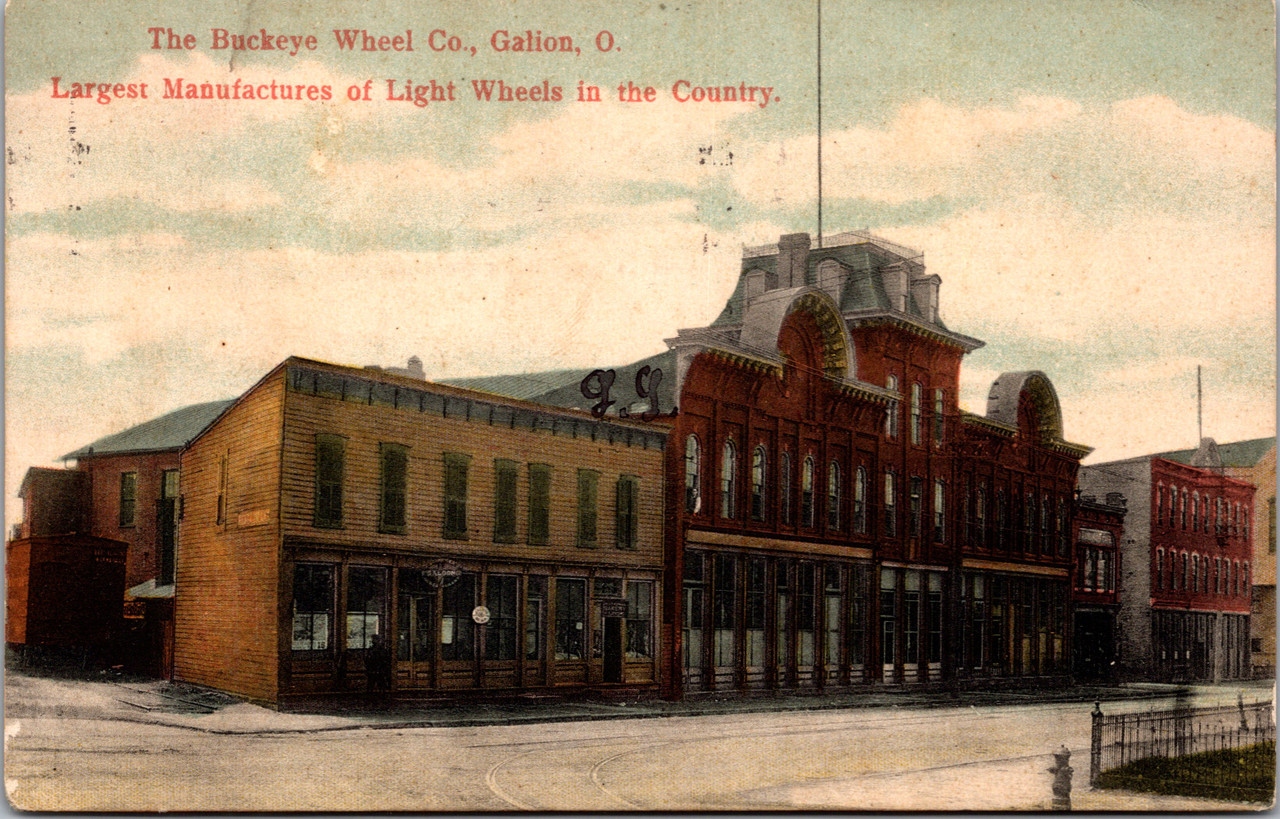
Galion’s Buckeye Wheel Company was remembered locally as one of the city’s notable industrial manufacturers and as a large maker of light wheels used on wagons and related vehicles.
1904
The conflict usually described as the wheel trust crisis brought business pressure, legal trouble, and reputational damage, showing how aggressively competitive this industrial field had become.
1912
The county history still treated Galion’s manufactures as a major subject, suggesting that the industrial identity built in Flickinger’s era remained historically significant even after the crisis years.

Historical evidence in the images

Buckeye Wheel Company factory in Galion
Factory: Buckeye Wheel Company. Postcard view of the Buckeye Wheel Company, Galion, Ohio. The caption calls it one of the “largest manufactures of light wheels in the country,” showing the scale of local ambition.
Fair Week downtown scene in Galion
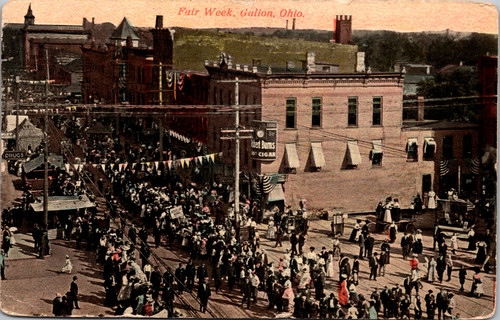
Town scene: Fair Week in Galion. Looking east over downtown during Fair Week, with decorated streets, tracks, and storefronts. The image places Galion’s industries inside a crowded, lively civic setting.
Edward Flickinger portrait
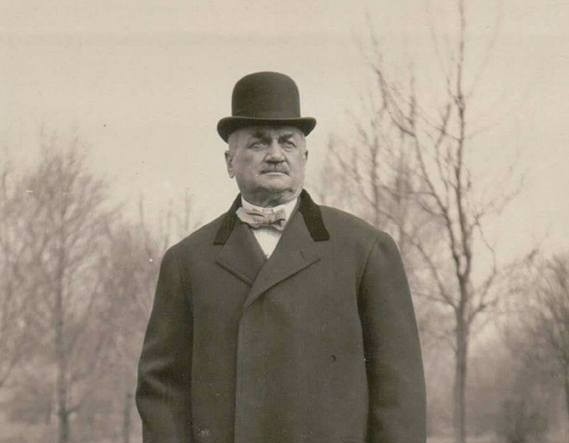
Portrait: Edward Flickinger. Full-length outdoor portrait associated with Edward Flickinger, the wheel-industry entrepreneur whose business and investments tied Galion to wider manufacturing and financial networks.
Galion Wagon and Gear Company stock certificate
Document: Galion Wagon & Gear Company stock certificate, 1898. Certificate no. 15, for five shares owned by Ferd Unkrich, at $50 per share, in a company capitalized at $50,000. It makes the otherwise invisible structure of local investment clearly visible.

Figures and details

15
Certificate number on the attached Galion Wagon & Gear Company stock document.
5 shares
Quantity written on the certificate held by Ferd Unkrich.
$50 each
Par value per share printed at the bottom of the certificate.
$750
Total face value represented by five shares at $50 each.
$50,000
Capital stock printed on the certificate, indicating the scale at which the company represented itself financially.
1902
History of the Flickinger Family was published at Edward Flickinger’s request in Galion, confirming his local presence and patronage.
11 children
Jacob and Susanna Kumler, the parents of Hannah Kumler Flickinger, had eleven children who married and produced a large descendant network; the family history reflects the social standing of the extended family world in which Edward emerged.
102 children
The same family history records 102 children born to those eleven Kumler children, evidence of the large kinship networks behind many nineteenth-century Ohio business families.
482 descendants
By 1889, the Kumler family sketch counted 482 living descendants, showing the scale of the wider family context connected to the Flickingers.
“Largest Manufactures of Light Wheels in the Country” is not just a label on a postcard. It is a compact expression of the civic confidence behind Galion’s industrial age.

Why this matters

Flickinger’s importance lies in the way his story brings several kinds of history together: industrial production, local boosterism, capitalization, legal conflict, and civic identity. In one biography, viewers can see how a small Ohio city tried to build national significance through manufacturing.

What the county history shows

The 1912 county history devoted separate major sections to the City of Galion and to Crawford County manufactures. That editorial choice is itself evidence. It suggests that local writers and readers believed industry was central to the story of Galion, not a side note.

Reading the certificate

The stock certificate is especially revealing because it converts local memory into numbers. It gives a capital figure, a share value, an owner’s name, a certificate number, and a date. Those details show that Galion’s industrial rise rested on organized corporate structures and investor confidence, not simply on slogans.

Sources behind this panel

Key factual anchors used here include the 1912 History of Crawford County, Ohio, and Representative Citizens; the 1902 History of the Flickinger Family published at Edward Flickinger’s request in Galion; and local-history descriptions of Buckeye Wheel Company as a major Galion manufacturer of light wheels.